Sold out · Ask us about restocking
Not available to order right now.
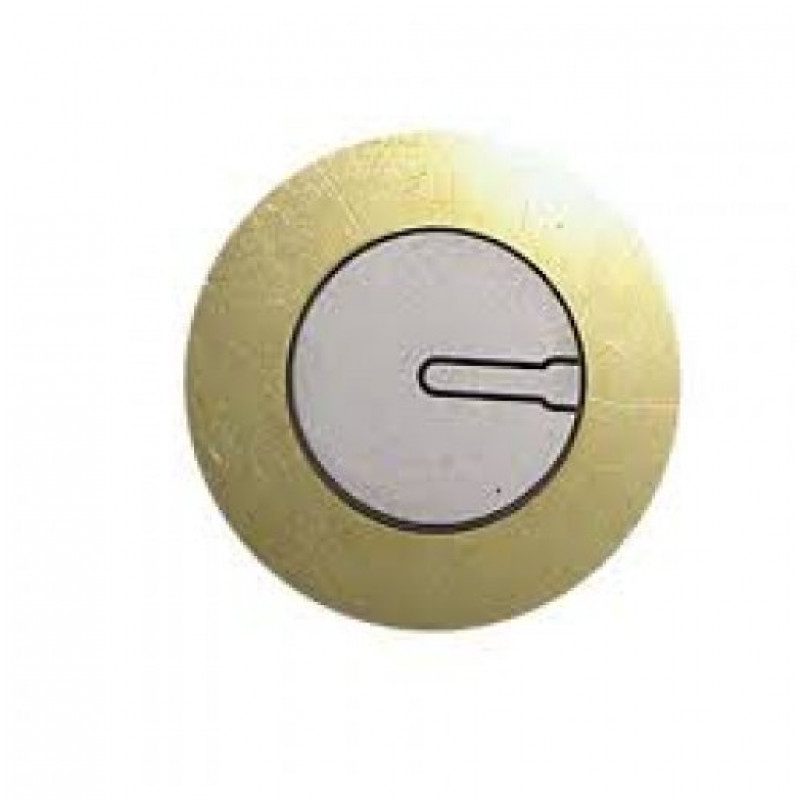
This 35mm piezo electric ceramic plate works in both directions: apply a voltage across it and it vibrates, making it usable as a simple buzzer or tone generator, or physically vibrate or knock it and it generates a small voltage, making it usable as a knock sensor, tap detector or vibration sensor. That dual nature is what makes piezo plates like this popular for both knock-sensing alarm circuits and simple energy-harvesting demonstrations, such as footstep-powered lighting experiments.
Its resonance frequency is rated at 4.6kHz plus or minus 0.5kHz, with a resonance impedance of 200 ohms and a capacitance of 20nF plus or minus 30 percent at 1kHz, figures relevant to anyone designing a driving circuit tuned to the plate's natural vibration frequency for the loudest or most efficient tone output.
The plate uses a brass base, a common substrate choice for these piezo elements since it is cheap, easy to bond the ceramic disc to, and flexible enough to vibrate effectively at the plate's resonance frequency. It operates across a wide -20C to 70C temperature range, with storage extending further to -30C to 80C, giving it reasonable tolerance for both indoor projects and slightly harsher outdoor or automotive-style applications.
Wiring is simple: two connection points, one to the brass base and one to the ceramic disc surface, are all that's needed to either drive the plate as a buzzer or read a voltage from it as a sensor.
Hobbyists building knock-detection security circuits, simple tap-to-activate projects, basic alarm buzzers, or educational demonstrations of piezoelectric power generation will find this a flexible, low-cost building block for either direction of use.
Yes, it converts voltage to vibration and vibration to voltage.
4.6kHz, plus or minus 0.5kHz.
Brass.
-20C to 70C operating, -30C to 80C storage.
With two connections, one to the brass base and one to the ceramic disc surface.
| Brand | Generic |
|---|---|
| Material | Brass |
| Selling unit | PCS |