Sold out · Ask us about restocking
Not available to order right now.
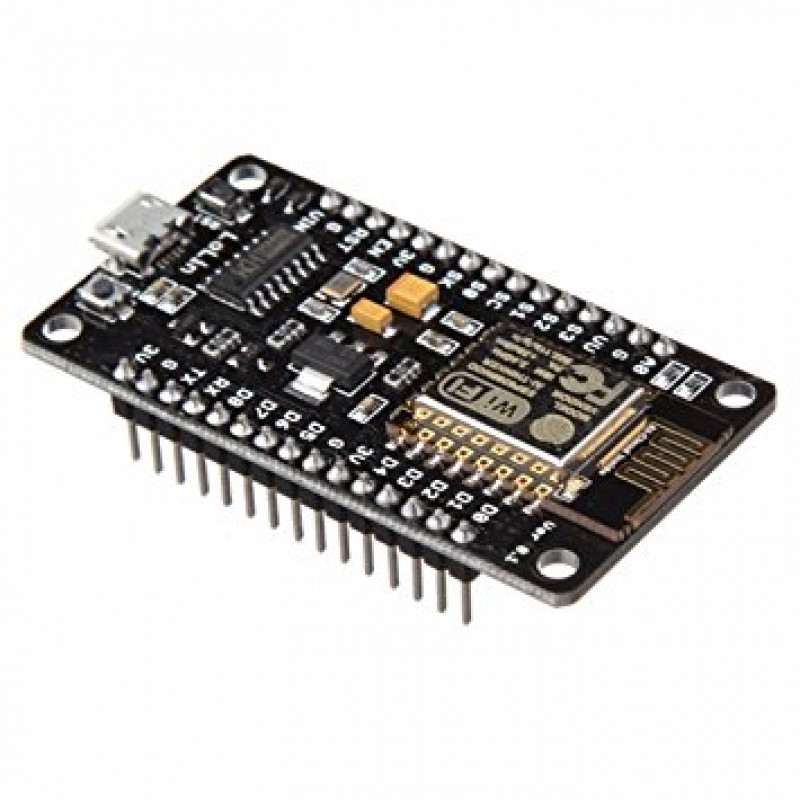
The NodeMCU board is an IoT development module built around the ESP8266 WiFi chip, and takes its name from the open-source firmware and Lua scripting environment historically associated with these boards. As the listing puts it, NodeMCU is an open source Internet of Things platform, and it remains one of the more approachable ways to get an ESP8266-based project running quickly.
The chip integrates GPIO, PWM, I2C, one-wire and ADC support directly, so a single small board covers a wide range of common sensor and actuator interfacing needs without extra chips.
A CH340G USB-to-TTL bridge chip is included on the board, described in the listing as plug-and-play, which means connecting it to a computer over USB is enough to start programming or monitoring serial output, without configuring a separate adapter. Ten GPIO pins are exposed, and every one of them can be used as PWM, I2C or one-wire, giving a consistent and flexible set of options regardless of which pin a project uses.
While Lua is the scripting language most associated with the NodeMCU name, boards like this are also commonly flashed with the Arduino core for ESP8266, giving a choice of programming approach depending on what the developer prefers.
Anyone starting out with WiFi-connected microcontroller projects, especially where a simple, well-documented and low-cost board is wanted, will find the NodeMCU a sensible choice. Its open-source platform and large community mean plenty of existing tutorials and example code are available.
The ESP8266 WiFi chip.
No, a CH340G USB-to-TTL bridge is included on the board.
10, and each one can act as PWM, I2C or one-wire.
Lua is the language traditionally associated with NodeMCU firmware.
Yes, it is described as an open source, easily programmable IoT platform with strong community support.
| Brand | Generic |
|---|---|
| Chipset | ESP8266 |
| MCU / Processor | ESP8266 |
| Selling unit | PCS |