 1 / 3
Sold out · Ask us about restocking
Not available to order right now.
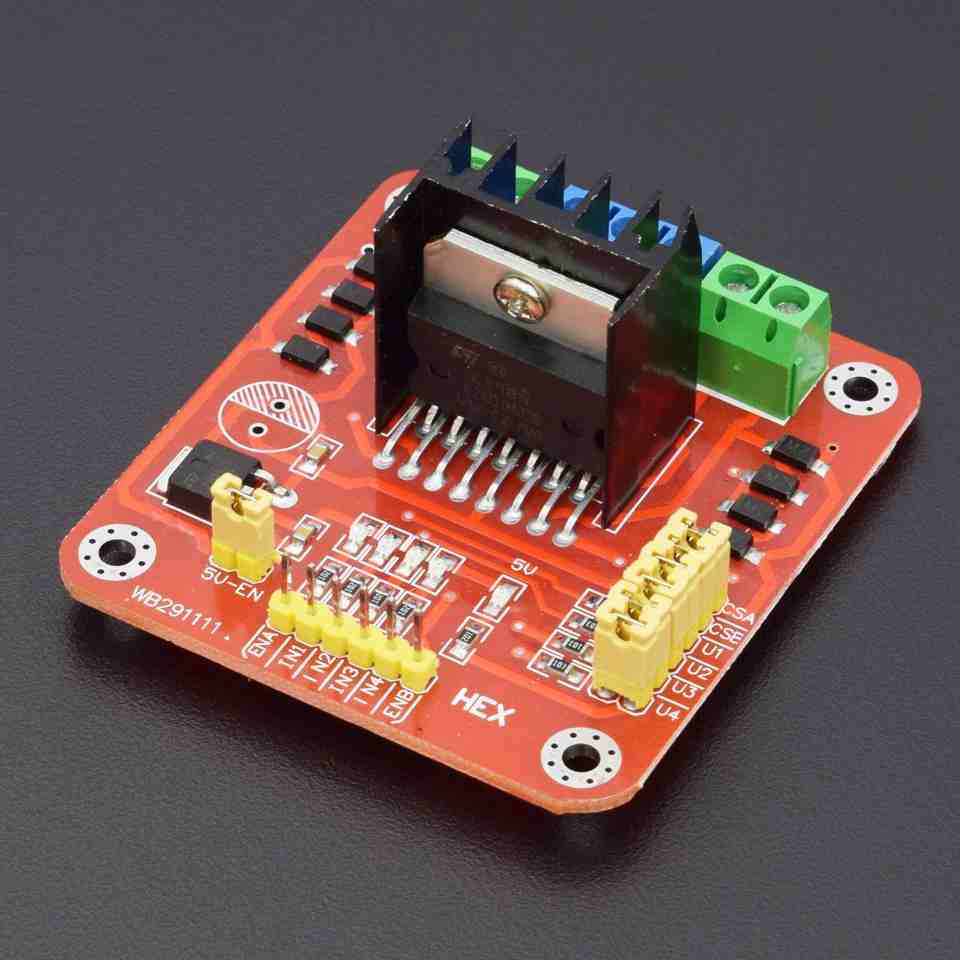
The L298N module is built around ST's L298N dual H-bridge motor driver chip, one of the most common driver ICs used in hobby robotics because of how flexibly it can be wired: it drives two DC motors from 3V to 30V independently in either direction, or alternatively controls a single 2-phase stepper motor when the same H-bridges are used together. That flexibility, plus a proven track record, is why it appears in a huge range of Arduino-based robot car kits and DIY motor projects.
The board includes a 5V output interface that can power a connected microcontroller directly, taken from the same supply feeding the motors, so a separate power source for the logic side of a project is not always necessary, though the board can also accept a purely logic-level supply on its own pins if needed.
Peak current is rated at 2A per bridge, with a logic supply voltage of 4.5V to 5.5V and a logic operating current from 0mA to 36mA, keeping the control side of the board efficient even while the motor side handles higher current. Control signal inputs read high at 4.5V to 5.5V and low at 0V, and the board supports 3.3V microcontroller control as well as 5V logic, widening the range of boards it can pair with.
Maximum power consumption is rated at 20W, and the board operates across a wide -25C to 130C temperature range. It measures 55 x 60 x 30mm, a compact size for the amount of motor control it packs in.
Robot builders needing simple, direction- and speed-controllable output for two DC motors, or a single 2-phase stepper motor, will find the L298N a well-documented and widely supported choice, backed by a large body of existing tutorials and example code.
Two DC motors independently, or one 2-phase stepper motor.
3V to 30V.
Yes, it includes a 5V logic output that can power a connected microcontroller.
2A.
Yes, it supports 3.3V microcontroller control in addition to standard 5V logic.
| Brand | Generic |
|---|---|
| Driver IC | L298N |
| Selling unit | PCS |