 1 / 3
Sold out · Ask us about restocking
Not available to order right now.
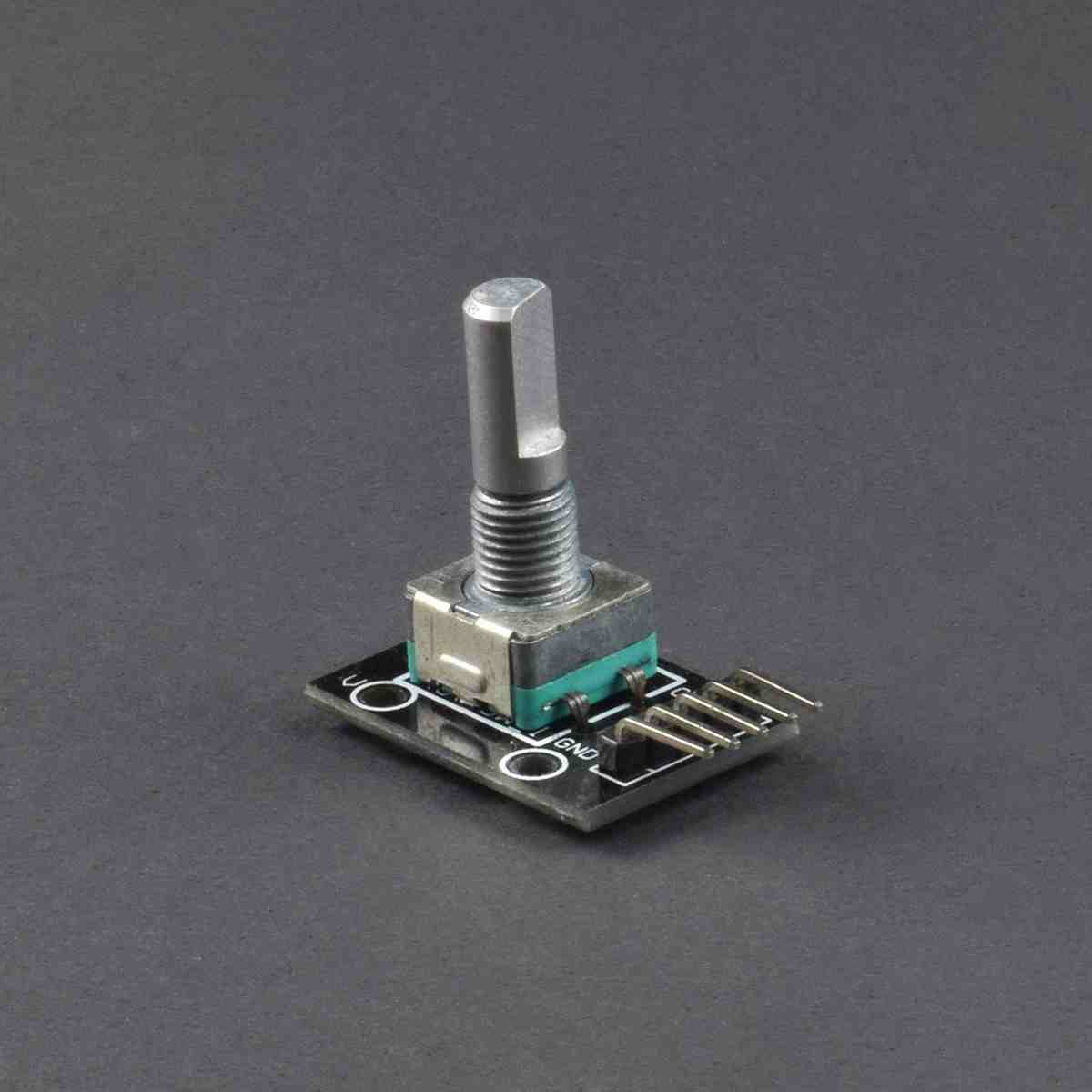
A rotary encoder gives a project something a potentiometer cannot: continuous, unlimited rotation with no end stop, reporting direction and step count rather than an absolute position. This module outputs 20 pulses per revolution on two phase-shifted channels, and reading which channel changes first tells a microcontroller whether the knob turned clockwise or counter-clockwise - the standard quadrature encoding pattern most encoder libraries already expect.
Many also include a push-button function built into the shaft itself, turning one component into both a rotary input and a select button, which is why encoders like this show up so often in menu-driven projects: turn to scroll, press to confirm, with a single part.
Common uses are menu navigation on small embedded devices, volume or parameter control knobs, and any interface needing precise incremental input rather than the coarse, drifting reading of an analog potentiometer.
| Brand | Generic |
|---|---|
| Selling unit | PCS |