 1 / 3
Sold out · Ask us about restocking
Not available to order right now.
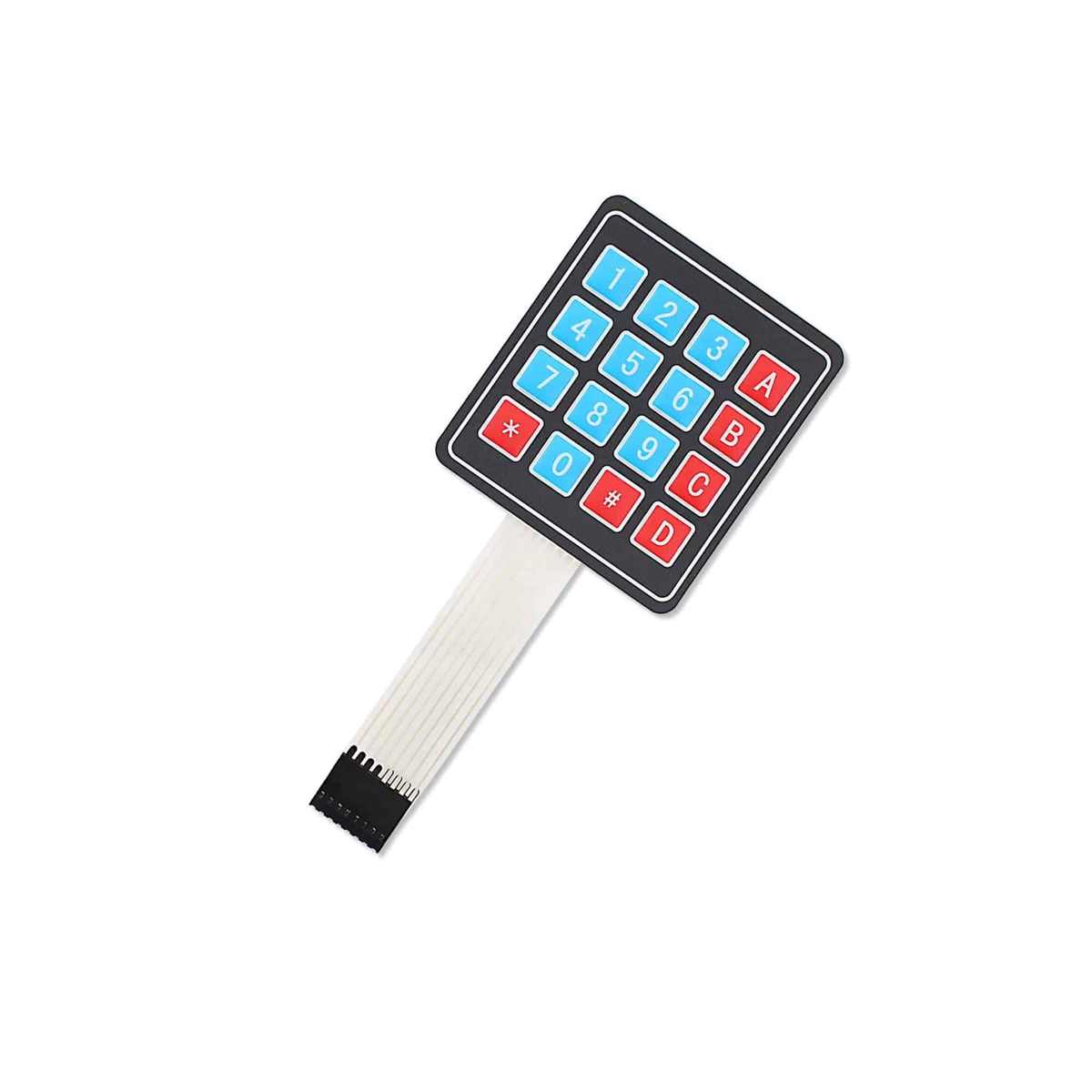
Reading 16 individual buttons directly would cost 16 GPIO pins, which is why keypads are wired as a matrix instead: 8 pins (4 rows, 4 columns) scanned in sequence let a microcontroller identify which of the 16 keys is pressed by finding which row-column intersection closes, cutting the pin count by half compared to individual buttons. That scanning logic is handled by well-established keypad libraries, so integration is a matter of wiring and a library call rather than custom matrix-decoding code.
The membrane construction keeps it thin and flexible with a self-adhesive back, suited to mounting on an enclosure face rather than needing panel-mount hardware, and the flat design tolerates the kind of repeated pressing a password-entry or menu-navigation interface sees over its life.
Common uses are keypad-entry access control and security systems, calculator and numeric-entry projects, and menu navigation on any embedded device needing more input options than a couple of buttons provide.
| Brand | Generic |
|---|---|
| Connector | 8-pin ribbon |
| Selling unit | PCS |