 1 / 3
Sold out · Ask us about restocking
Not available to order right now.
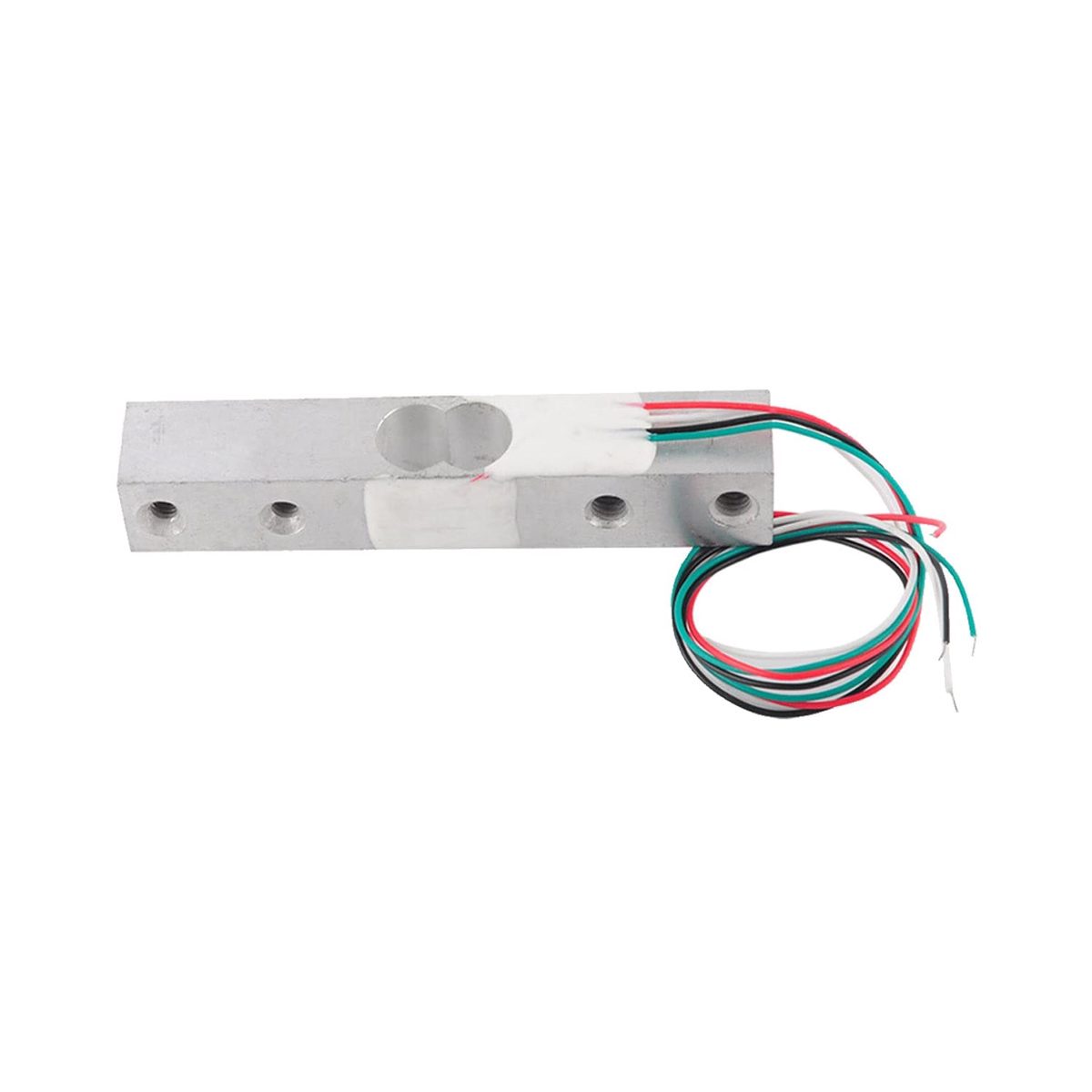
A load cell measures weight indirectly - a small aluminum beam flexes by a tiny, precise amount under load, and strain gauges bonded to that beam turn the flex into a proportional change in electrical resistance, which shows up as a small voltage difference across the four lead wires. That voltage is far too small to read directly on a microcontroller's ADC, which is why load cells are always paired with a dedicated amplifier chip like the HX711 rather than being wired straight into an analog input.
At a 0-1kg rated capacity, this cell suits genuinely small-scale measurement - kitchen ingredient portions, small parcel weight, light industrial part counting - rather than anything approaching bathroom-scale weights. Its four-wire configuration (excitation+, excitation-, signal+, signal-) is the standard load cell wiring scheme, so it drops into the same HX711 circuits and example code used for load cells of any other capacity.
Common uses are DIY kitchen scale builds, small parts-counting systems that weigh a batch and divide by unit weight, and any lightweight object measurement project needing more precision than a spring scale provides.
| Brand | Generic |
|---|---|
| Material | Aluminium |
| Selling unit | PCS |